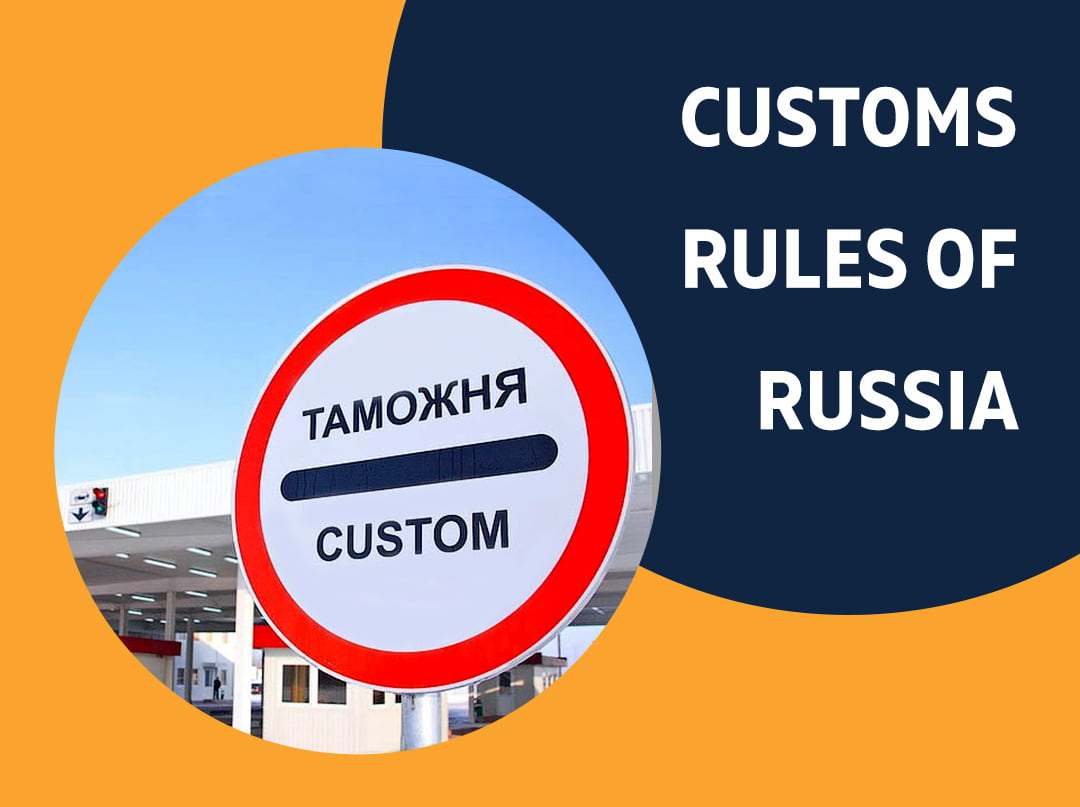
Customs regulations for entry into Estonia from Russia
Updated: October 2026
Sanctions restrictions on the import of goods from Russia
From Russia to the EU, the following are prohibited for import:
- tobacco products
- alcohol of Russian origin
- cosmetics and hair care products, hygiene products
- detergents and cleaning products
- phones and wireless communication devices
- smart speakers, smartwatches
- data storage devices (flash drives, disks, records, etc.)
- household appliances and electrical devices
- photographic equipment, binoculars and optics
- lighting fixtures, lamps, LEDs
- technical equipment
- clothing and footwear
- bags and wallets
- glass and glass vessels
- gold and articles of gold
- caviar and caviar substitutes
The import of goods originating from the Crimea, Donetsk and Luhansk regions is prohibited.
The full list of goods is given in Annex XXI to Article 3i of Council Regulation (EU) No 833/2014
These restrictions do not apply to passengers' personal belongings if they are required by the passenger during the journey.
For an item to be considered a personal item, it must:
- belong to the passenger;
- be intended for the passenger's use during the trip;
- be present in a reasonable quantity;
- correspond to the nature and duration of the trip;
- not be intended for sale, gifting, or transfer to anyone else.
If you are unsure whether a particular item can be exported or imported into Estonia, you can write to the Estonian Tax and Customs Board at tolliinfo@emta.ee.
Restrictions on the import of currency from Russia
You cannot take out of Russia cash currency exceeding the equivalent of $10,000 (at the exchange rate of the Central Bank of the Russian Federation on the day of travel) per passenger. You can take out any amount of cash in Russian rubles. If the amount in rubles exceeds the equivalent of $10,000, you must fill out a customs declaration and provide documents on the origin of the funds (for example, a certificate of income).
Customs regulations when entering Estonia from outside the European Union
For current customs regulations in Estonia, please visit the website of the Estonian Customs Department.
A passenger arriving in Estonia from a non-EU country may import non-commercial goods worth up to €300 tax-free, while a passenger arriving by air or sea may import goods worth up to €430.
Tobacco products
Passengers over 18 years of age are allowed to import tobacco products in their personal baggage during their first and second arrival in Estonia during a calendar month in the following quantities:
- 40 cigarettes* or
- 100 cigarillos* or
- 50 cigars* or
- 50 grams of smoking tobacco* or
- 20 milliliters of tobacco liquid
- 120 grams of solid tobacco substitute (including tobacco-free snus) or
- 20 grams of other alternative tobacco product.
Quantities marked with an asterisk* may be combined, provided that each quantity is 100% and you can bring 100% in total. Combination example: 20 cigarettes (50% of 40 cigarettes) plus 25 cigars (50% of 50 cigars).
Upon the third arrival of a passenger in Estonia during the same calendar month, customs may apply an additional exemption from excise duty if the passenger proves that the import of tobacco products is incidental.
Alcohol
Due to EU sanctions, the import of any alcohol produced in Russia is prohibited.
Passengers over 18 years of age are allowed to bring in the following quantities of alcohol in their personal baggage upon their first arrival in Estonia during a calendar month:
- wine up to 4 liters (except sparkling wine, liqueur wine);
- beer up to 16 liters;
- 2 liters of alcoholic beverages with an alcohol content of up to 22% (including sparkling wine, liqueur wine)* or
- 1 liter of strong alcohol over 22%* (except those produced in Russia).
The quantities marked with an asterisk* can be combined, taking into account that each quantity is 100% and you can bring 100% in total. Combination example: 1.5 liters of a drink up to 22% (75% of 2 liters) plus 0.25 liters of a drink with a strength higher than 22% (25% of 1 liter).
If the passenger re-enters Estonia within the same calendar month, customs may apply an additional exemption from excise duty if the passenger proves that the import of alcohol is incidental.
Food
When entering Estonia from Russia, it is prohibited to import meat and dairy products, as well as products containing meat or milk (for example, sausages, canned meat, dumplings, ice cream, condensed milk, etc.).
Any fresh fruits, vegetables, berries, cut flowers, seeds, seedlings, and houseplants from third countries are prohibited from being imported into the EU without a phytosanitary certificate. Only bananas, coconuts, durians, pineapples, and dates are permitted as an exception.
Allowed to import:
- gutted fresh fish or fish products up to 20 kg per person (except black caviar); fish over 5 kg cannot be exported from Russia;
- sturgeon (black) caviar — no more than 125 grams per person in factory-marked packaging (requirement of the CITES convention);
- meat- and dairy-free products for personal consumption;
- baby food and medical nutrition in sealed factory packaging up to 2 kg per person;
- therapeutic food for pets travelling with a passenger, provided that the food has a long shelf life and is in sealed original packaging weighing up to 2 kg.
Medicines
When you arrive in or leave Estonia, you can take medicines with you for personal use or for animals travelling with you.
Over-the-counter medications
- you can take with you up to 10 different types of over-the-counter medications, no more than 5 packages of each;
- for animals - no more than 5 different types of over-the-counter medications, no more than 3 packages of each.
Acceptable sizes of retail packages for travel:
- 200 tablets or capsules;
- 500 g of powder used to prepare the solution;
- 500 ml of infusion solution or oral solution;
- 30 ampoules or vials for injection dosage forms;
- 200 ml or 200 g of the preparation for external use;
- 200 doses of inhalation drug;
- 10 units of medicinal patches;
- 50 g homeopathic granules;
- 100 g of medicinal plants.
If you need to take more medicines than stated above, or larger packages than permitted, and they are necessary for medical reasons, you will need to obtain permission in advance from the Department of Medicines.
Prescription drugs
Prescription medications can be taken for as long as your doctor prescribes.
You must have an electronic version or a printout of the electronic prescription (for Estonian prescriptions), a copy of the paper prescription or a certificate from a doctor about the need to take the medication.
For animals, prescription medications can also be taken in the required quantity, but a certificate from a veterinarian or a copy of the prescription will be required.
Narcotic and psychotropic drugs
The rules depend on whether you are travelling to or from a Schengen country.
If you are travelling to a country outside the Schengen area:
You can take as much as your doctor prescribed, but be sure to have a prescription or a doctor's note with you.
Before traveling, be sure to check the rules in your destination and transit country. Permission may be required or there may be quantity restrictions.
If you are travelling to a Schengen country:
You can take narcotic and psychotropic drugs with you for a period of no more than 30 days of treatment.
Each such drug must be accompanied by a special Schengen certificate (it will be issued in pharmacies from September 1, 2024) or special permission from the Estonian State Agency of Medicines (Ravimiamet).
This certificate is required both for transit through Schengen countries and for travel to their islands.
More detailed information on importing medicines into Estonia is available on the website of the Estonian Tax and Customs Board.
Selection of customs corridors
At the border point, where one can choose between different customs corridors, the passenger chooses the green one if he has goods with him that are not subject to declaration and the quantity of which does not exceed the permitted maximum standards.
The passenger chooses the red corridor if he has the following goods with him:
- goods whose value exceeds the duty-free limit;
- goods, the quantity of which exceeds the duty-free limit;
- goods that require special permission.
If you are not sure whether the goods in your luggage require a written declaration, you should choose the red corridor.
At a border checkpoint where there are no customs corridors, the passenger should contact a customs or border guard officer to declare the goods or present a special permit.
Tax-Free
Passengers from outside the European Union can purchase goods in a tax-free shop with a VAT refund. Sales with a VAT refund mean that VAT is added to the price of the goods at the time of sale and is later refunded to the buyer. The VAT refund comes into effect if the selling price of the goods purchased with VAT exceeds 38 euros. In the tax-free shop, the buyer is given a document confirming the purchase, which he must present to customs when leaving the European Union to obtain confirmation. The buyer must export the goods in unopened original packaging outside the European Union no later than the end of the third month following the month of purchase of the goods. At the request of customs, the passenger must present the packaged goods without signs of opening for customs control. Information on VAT refunds can be obtained from retail outlets selling tax-free goods.